Garden Fundamentals: Where the Magic Actually Begins
If there’s one thing I’ve learned over time, it’s this: good gardening isn’t complicated—but it does require attention to the right things.
Strip everything back, and what you’re really working with is a kind of “Golden Trio”: sunlight, soil, and water. Get those three working in harmony with your plants, and you’re most of the way there. Miss the mark on one of them, and the garden will let you know—often quickly.
What follows isn’t a rigid set of rules, but a framework. The fundamentals. The things that, once understood, give you the confidence to make decisions without second-guessing every step.
Start With the Right Place
Before you plant anything, you’re making your most important decision: where it’s going to live.
Most of the plants we love—vegetables, flowering perennials, annuals—want plenty of sunlight. Six to eight hours a day is the sweet spot. There are exceptions, of course. Leafy greens and a few shade-tolerant plants will forgive you for less, but most won’t thrive without that steady light.
Then there’s practicality, which is often overlooked. If your garden is tucked away somewhere inconvenient, far from a water source or out of sight, it’s far more likely to be neglected. The best gardens tend to be the ones you pass by every day.
And finally—drainage. Plants don’t like wet feet. If water sits after a rainstorm, that’s not a charming low spot—it’s a warning sign. Roots need oxygen just as much as they need moisture.
Soil: The Quiet Workhorse
It’s easy to focus on what’s happening above ground—flowers, foliage, harvests—but everything depends on what’s happening below.
Healthy soil isn’t just “dirt.” It’s a living system.
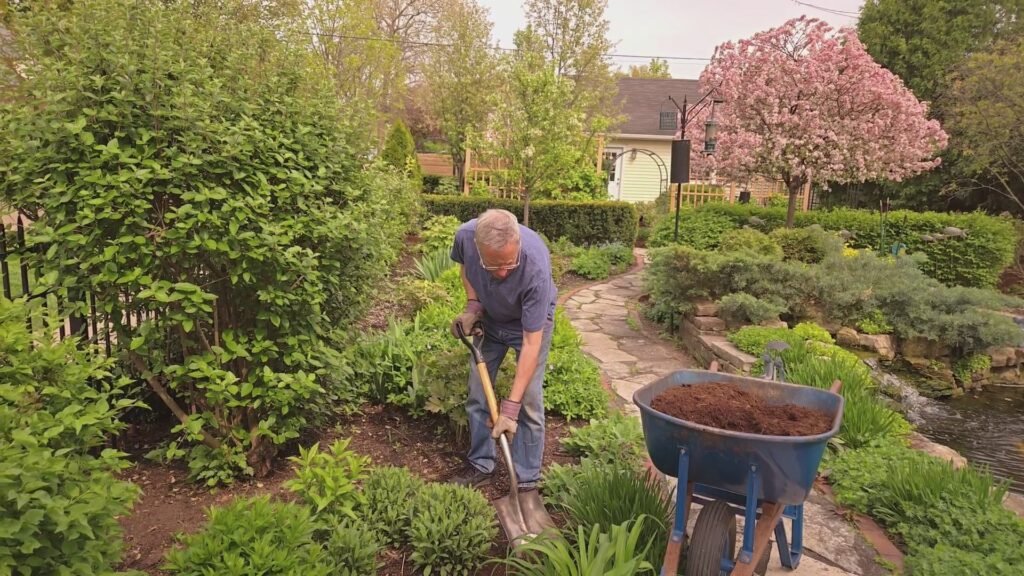
Adding organic matter—compost, shredded leaves, well-rotted material—once a year does more than just “feed” your plants. It improves structure, helps retain moisture, and supports the microbial life that makes nutrients available in the first place.
You’re not just feeding plants—you’re feeding the ecosystem that supports them.
Good soil has a certain feel to it. Crumbly. Balanced. Not heavy like clay, not loose like sand. Somewhere in between. That balance is what allows roots to move, expand, and do their job properly.
Watering With Intention
Watering seems simple, but it’s one of the most common places things go wrong.
Consistency matters more than frequency. Plants don’t respond well to extremes—bone dry one day, soaked the next. That kind of stress shows up quickly in poor growth and common issues.
The goal is steady, even moisture.
It’s also worth thinking about how you water. Deep, less frequent watering encourages roots to grow downward and outward, making plants more resilient over time. Shallow, frequent watering does the opposite.
Whenever possible, water at the base. Drip irrigation, soaker hoses—anything that gets water to the roots without wasting it on leaves or letting it evaporate too quickly.
And don’t underestimate mulch. A simple layer of organic material on the surface can hold moisture, regulate temperature, and quietly reduce the amount of work you need to do.
Keep It Manageable
One of the biggest mistakes—especially early on—is doing too much.
It’s tempting to build the garden all at once. Beds, borders, containers everywhere. But gardening rewards consistency, not ambition. A single well-tended space will teach you more than a sprawling one you can’t keep up with.
Start small. Learn the rhythms. Expand when you’re ready.
And keep your tools simple. A good hand trowel, a pair of gloves, something to move soil around, and a reliable way to water—that’s really all you need to begin.
A Shift in Mindset
Gardening sits somewhere between art and science.
Plants are already wired to grow, adapt, and reproduce. Our role isn’t to control every outcome—it’s to pay attention, to respond, to guide.
For a long time, it’s easy to feel like success means keeping everything alive, perfectly, all the time. That’s a noble idea, but it’s not how the natural world works.
Loss happens. Weather shifts. Things fail.
And often, those moments teach you more than the easy successes ever could.
You can’t control everything—but you can control your decisions. And when those decisions are rooted in a solid understanding of the fundamentals, your garden becomes a far less intimidating place.
What’s Happening Below the Surface
It’s worth pausing to think about something we don’t often see: roots.
All that growth above ground—flowers, foliage, fruit—is only possible because of what’s happening below. And those two systems need to stay in balance.
There’s an old gardening phrase:
“First year it sleeps, second year it creeps, third year it leaps.”
That’s not just poetic—it’s practical. In the early stages, plants are investing in roots. Establishing themselves. Building the foundation that will support future growth.
Which is why watering, especially in the first few years, matters so much.
In year one, roots are small and need consistent support. In year two, they begin to stretch outward. By year three, they’re starting to function more independently—but they’re still not invincible.
Understanding that timeline changes how you care for your plants. It shifts your focus from quick results to long-term strength.
Feeding the System, Not Just the Plant
If something in your garden isn’t thriving, the answer is often in the soil.
Regular organic amendments go a long way, but sometimes plants need a bit of a boost. When that’s the case, it’s best to think in terms of balance rather than force.
Organic fertilizers tend to work more gently, supporting the soil as much as the plant. Synthetic options can be effective, but they come with risks—especially if overused.
More isn’t better. In fact, it rarely is.
A measured, observant approach—watching how plants respond before adding more—is what leads to steady improvement over time.
Learn the “Why”
There’s no shortage of advice in gardening. Tips, tricks, shortcuts, miracle solutions.
But when you understand the fundamentals—the why behind how things work—you don’t need to rely on all that noise.
You can experiment with confidence. You can adjust when something isn’t working. And perhaps most importantly, you can avoid that feeling of paralysis that comes from overthinking every decision.
The fundamentals don’t limit you—they free you.
And once you’ve got them in place, that’s when the real magic of the garden begins.
A Few Trusted Resources to Go Deeper
There’s no shortage of gardening advice out there—but not all of it is created equal.
If you’re just getting started, I’d encourage you to lean on sources that are grounded in research and real-world experience rather than trends or quick fixes. The goal isn’t to memorize everything—it’s to build a solid foundation you can trust.
Here are a few resources I recommend:
University Extension Programs (The Gold Standard)
If you only bookmark one type of resource, make it this.
Programs like Purdue Extension, Penn State Extension, and Oregon State University Extension Service provide research-based, region-specific guidance on everything from soil health to pest management.
These are not opinion-based blogs—they’re built on horticultural science and decades of field experience. Penn State Extension even emphasizes the importance of verifying gardening information and being cautious about unverified online advice.
If you want clear answers without the noise, this is where to start.
Master Gardener Handbooks
If you prefer something more structured, Master Gardener manuals are about as close as you can get to a gardening “textbook.”
The Extension Gardener Handbook is a standout. It was developed for training Master Gardeners but is written clearly enough for beginners and covers everything from soils and composting to plant care and landscape basics.
Many states offer their own versions, often available free online.
Practical, Beginner-Friendly Books
A few well-regarded titles that consistently come up (and for good reason):
- The Vegetable Gardener’s Bible – A classic that breaks gardening down into simple, workable systems.
- The Complete Gardener – A broader, more holistic approach to gardening from one of the most respected voices in the field.
- Weedless Gardening – A practical, no-nonsense take on one of the most common frustrations in the garden.
These types of books are valuable because they go deeper than quick tips—they help you understand how and why things work.
A Simple Guiding Principle
When you’re deciding what advice to trust, here’s a good rule of thumb:
If it’s coming from a university extension, a trained horticulturist, or a long-standing reference book, you’re probably on solid ground.
If it sounds like a shortcut, a hack, or a miracle fix… it usually is.
Free Garden Resource Library
Get instant access to all of our guides.
Thank you!
Check your email in a moment for your Garden Resource Library access.