
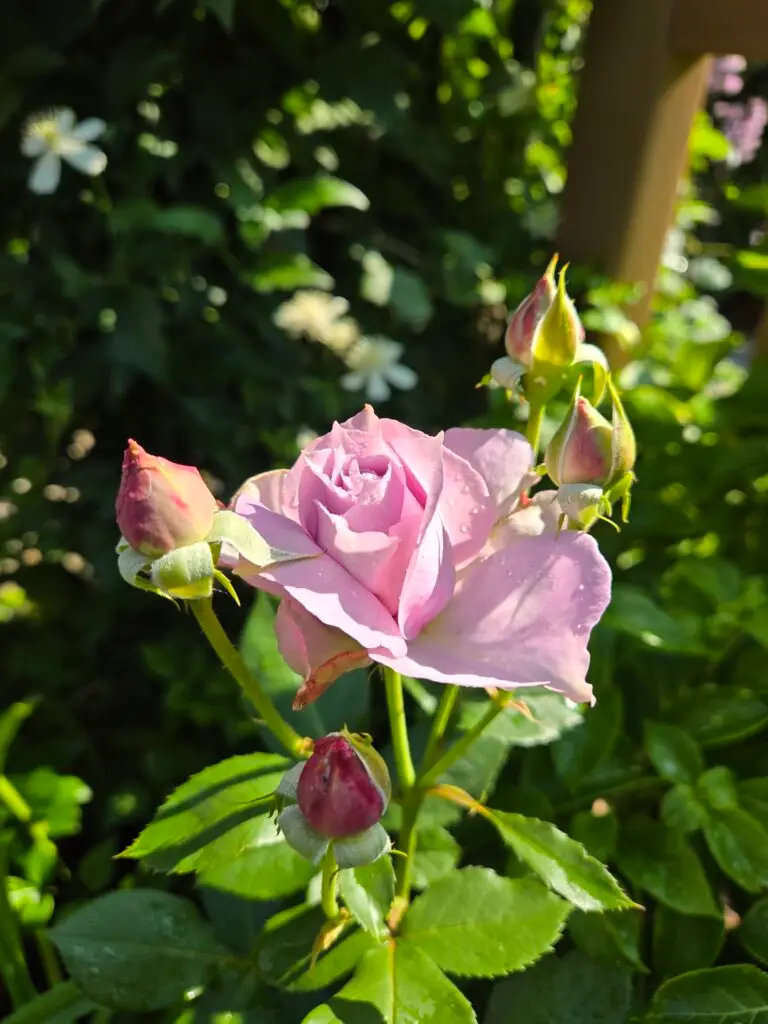
June Rose Care: 5 Simple Tips for Bigger, Longer-Lasting Blooms
1. Deadhead the Right Way (It Makes a Difference)
Not every fading bloom is ready to be cut—timing matters.
When deadheading:
- Wait until the flower is just past its best
- Follow the stem down to the first set of five leaflets
- Make your cut just above that point
👉 Avoid cutting too high (above 3-leaflet sets), as this can lead to weaker regrowth.
Also, try to leave at least two sets of healthy leaves on the remaining stem. This helps the plant push out strong new blooms more quickly.
2. Stay Ahead of Pests and Disease
June is prime time for issues to appear, so keep a close eye on your plants.
Look for:
- Spots or discoloration on leaves
- Chewed or damaged foliage
- Early signs of fungal problems
If you spot trouble:
- Remove affected leaves immediately
- For more severe cases, cut back the entire damaged section or branch
- Dispose of debris—don’t leave it in the garden
You can use sprays if needed, but physical removal is often the first and best line of defense.
3. Keep the Area Clean
This step is simple—but often overlooked.
Fallen petals and leaves may seem harmless, but they can harbor:
- Fungal spores
- Pests
- Disease
Make it a habit to:
- Regularly clear debris from around your roses
- Keep the soil surface tidy and open
A clean garden bed is one of the easiest ways to prevent problems before they start.
4. Feed for Continuous Blooms
Roses are heavy feeders, especially during peak blooming season.
For established plants:
- Feed every 4–6 weeks
- Use a balanced fertilizer (something like a 15-15-15 NPK ratio works well)
You can also go organic with:
- Composted manure
- Fish emulsion
👉 If your roses are newly planted, hold off on feeding until after their first bloom cycle.
5. Water Deeply (and Properly)
Consistent watering is key to strong, healthy roses.
- Aim for 1–2 inches of water per week
- Water deeply, not lightly
- Always water at the base of the plant
🚫 Avoid wetting the leaves—this encourages fungal diseases.
Deep watering promotes strong root systems, which means better drought resistance and more reliable blooms.
A Quick Note on Climbing Roses
If you’re growing climbing roses on an arbor or trellis, June is when they really shine.
This is also a great time to:
- Check their structure
- Tie in new growth
- Enjoy the results of earlier training
In a good year, the display can be absolutely stunning.
Watch the Video
Unlock the secret to a stunning summer garden with our top 5 easy rose tricks for more blooms!
If you want your roses to produce an abundance of flowers all season long, this is the video for you.
We cover everything from the proper technique for deadheading to boost new growth, to the best fertilizing and watering strategies to keep your plants healthy and vibrant. Learn how to spot and manage common rose pests and diseases, and discover a simple cleanup tip that can make a huge difference in preventing fungus.
Whether you’re a beginner or a seasoned gardener, these essential rose care tips will help you achieve a continuous display of beautiful blooms all summer.
Final Thoughts
Summer rose care doesn’t have to be complicated.
Focus on these five essentials:
- Smart deadheading
- Early pest control
- Clean surroundings
- Regular feeding
- Deep watering
Do that, and your roses will keep rewarding you with wave after wave of beautiful blooms all season long.