
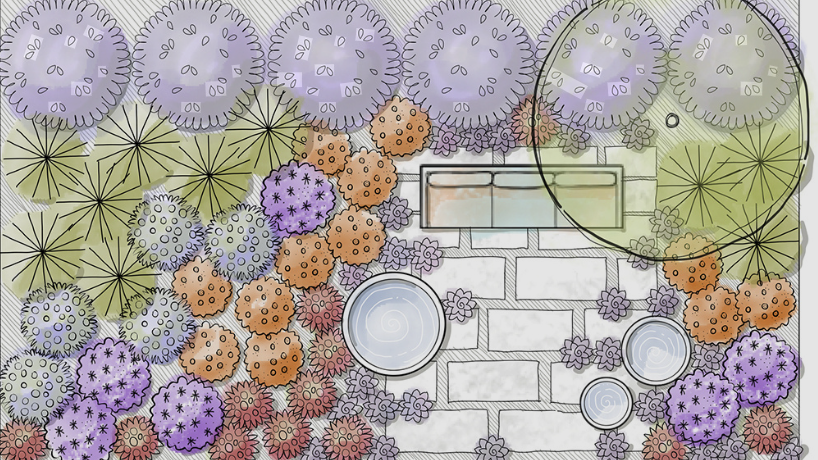
The Principles and Elements of Garden Design
A Complete Introduction to Creating Beautiful, Functional, and Timeless Gardens
Introduction: Garden Design as a Living Art
Garden design is often described as the slowest of the performing arts—and for good reason. Unlike painting or sculpture, where the work is fixed at the moment of completion, a garden is never truly finished. It grows, shifts, matures, and evolves with time. It responds to seasons, weather, and the subtle hand of the gardener. It is both an artistic composition and a living ecosystem.
In this way, a garden is a unique creative discipline. The “canvas” is three-dimensional. The “materials” are alive. And the “audience” doesn’t just observe—they step inside, move through it, and experience it from within.
This is what makes garden design so powerful—and so challenging.
Many people begin gardening by choosing plants they love and placing them wherever there’s space. And while that can create moments of beauty, it rarely produces a garden that feels cohesive, intentional, or deeply satisfying over time.
The difference between a collection of plants and a designed garden lies in understanding two fundamental ideas:
- The Elements of Design — the physical ingredients you work with
- The Principles of Design — the rules that guide how those ingredients are arranged
Together, these form the foundation of every successful garden, regardless of style—whether you’re creating a structured modern landscape, a naturalistic planting, or a romantic English cottage garden.
And perhaps most importantly: once you understand these fundamentals, you move beyond simply planting a garden…
and begin composing a landscape.
Part I: The Elements of Garden Design — The Ingredients
The elements of design are the tangible, visual qualities of everything you place in your garden. Plants, paths, walls, structures, water features—all of these express the core elements: line, form, texture, and color.
These are your raw materials. And like ingredients in cooking, how you combine them determines the final result.
1. Line: The Invisible Guide
Line is arguably the most powerful element in garden design because it controls how we move—both physically and visually—through a space.
It defines structure, directs the eye, and creates the underlying framework of the garden.
Different types of lines create very different emotional responses:
- Straight lines feel deliberate, formal, and controlled. They lead the eye directly and create a sense of order. You often see them in classical or contemporary gardens.
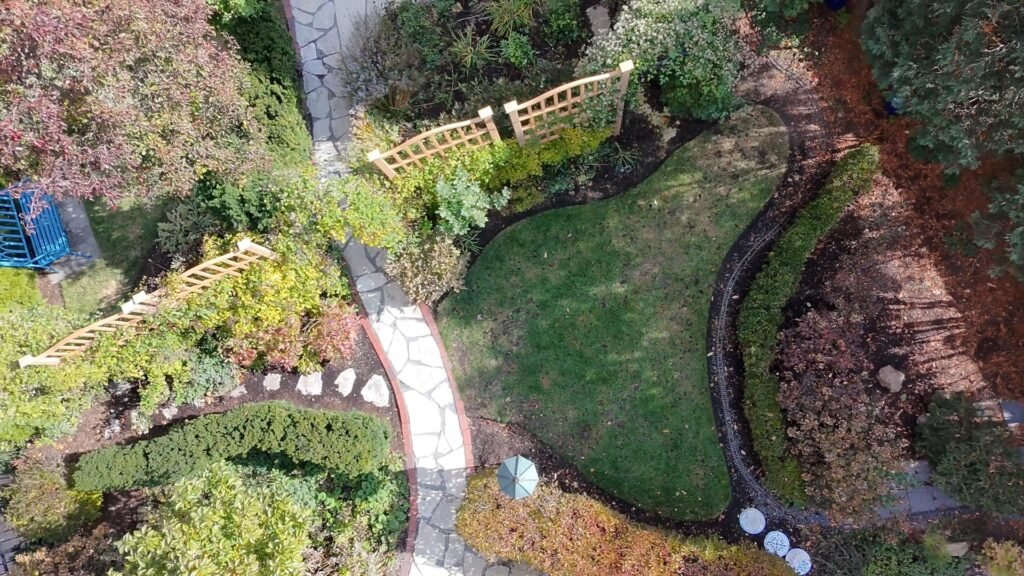
- Curved lines feel relaxed and natural. They slow the pace, encouraging exploration and discovery—perfect for informal or cottage-style gardens.
- Vertical lines (trees, arches, pergolas) draw the eye upward, adding drama and a sense of height.
- Horizontal lines (low hedges, walls, lawns) ground the space, creating calmness and stability.
In many ways, line forms the “skeleton” of your garden. Even the most relaxed, natural-looking space relies on carefully considered lines to guide movement and create coherence.
2. Form and Shape: The Architecture of the Garden
While line guides movement, form and shape define the physical presence of elements within the garden.
- Shape refers to the outline (2D)
- Form refers to the volume (3D)
Every plant and structure contributes a form:
- Rounded forms feel soft, calm, and natural
- Upright or columnar forms feel strong and formal
- Weeping forms suggest movement and tranquility
- Spiky or architectural forms add tension and drama
At a larger scale, form also applies to the layout of your garden:
- Circular lawns feel enclosed and intimate
- Rectangular patios feel structured and modern
- Free-flowing shapes feel organic and relaxed
Strong garden design often comes from contrasting forms—placing soft against rigid, tall against low, loose against structured.
3. Texture: The Subtle Layer of Depth
Texture is one of the most overlooked—but most important—elements in garden design.
It refers to how surfaces feel visually (and sometimes physically).
- Coarse textures (large leaves, bold foliage) feel strong and dominant
- Fine textures (delicate leaves, airy grasses) feel light and subtle
Texture influences how we perceive space:
- Coarse textures appear closer and make spaces feel smaller and more intimate
- Fine textures recede and make spaces feel larger and more open
The real magic happens in contrast. A bold-leaved plant next to a delicate grass makes both stand out more vividly.
Texture is what gives a garden richness—the difference between something that looks flat and something that feels layered and alive.


4. Color: The Emotional Language
Color is the most immediate and emotional element in garden design. It sets the mood instantly—but it is also the most temporary, constantly changing with the seasons.
- Warm colors (reds, oranges, yellows): energetic, bold, attention-grabbing
- Cool colors (blues, purples, greens): calming, spacious, serene
Designers often use color intentionally through schemes:
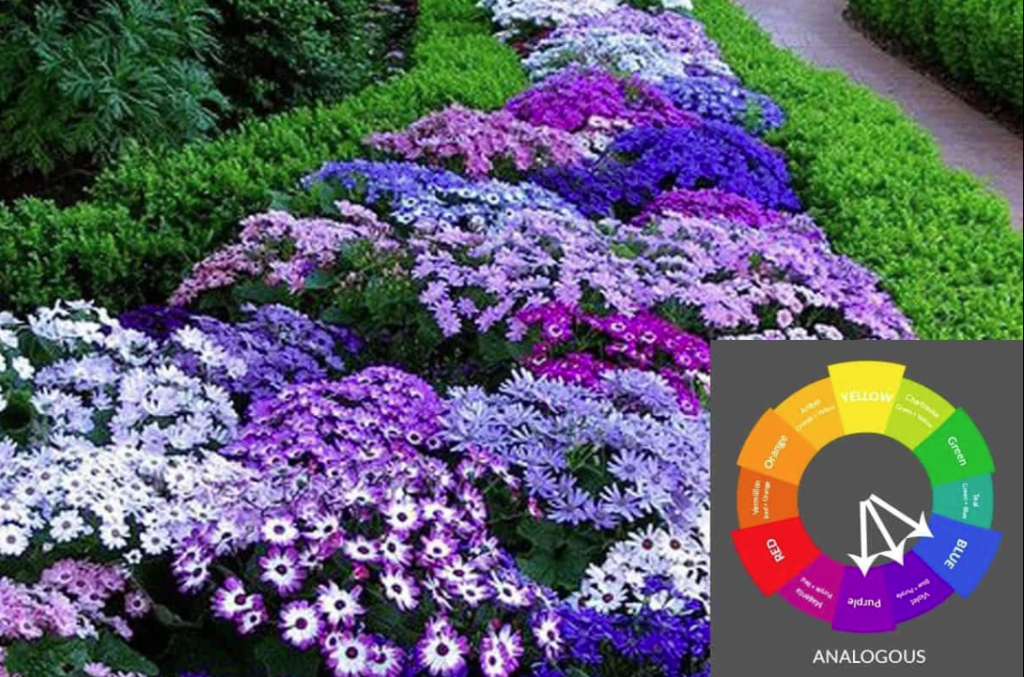
- Monochromatic (one color, many shades): calm and elegant
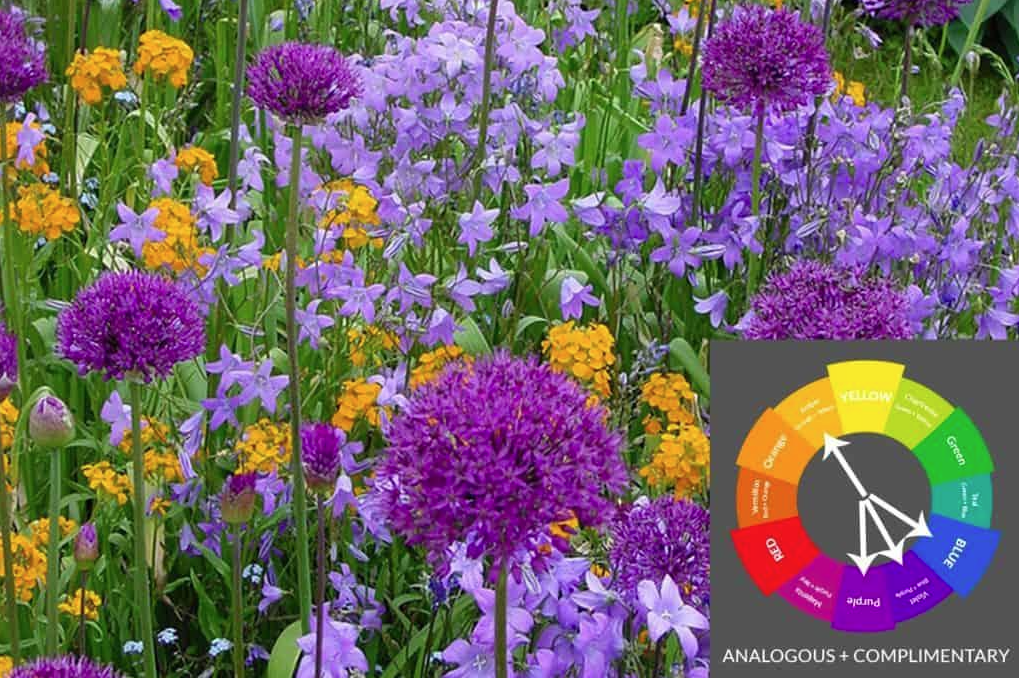
- Complementary (opposites on the color wheel): vibrant and dynamic
But great garden design doesn’t rely on flowers alone. Foliage color, bark, stems, and even seasonal changes all contribute to a year-round palette.
Part II: The Principles of Garden Design — The Composition
If the elements are your ingredients, the principles are your recipe—the rules that determine how everything comes together.
1. Unity and Harmony: Creating a Cohesive Whole
A successful garden feels like a single idea—not a collection of unrelated parts.
Unity is achieved through:
- Repetition of plants, materials, or colors
- Consistent style (modern, cottage, formal, naturalistic)
- A clear relationship between house and garden
This is where many gardens fail—not because of poor plant choices, but because there is no unifying vision.
2. Balance: Achieving Visual Stability
Balance ensures that a garden feels stable and comfortable to the eye.
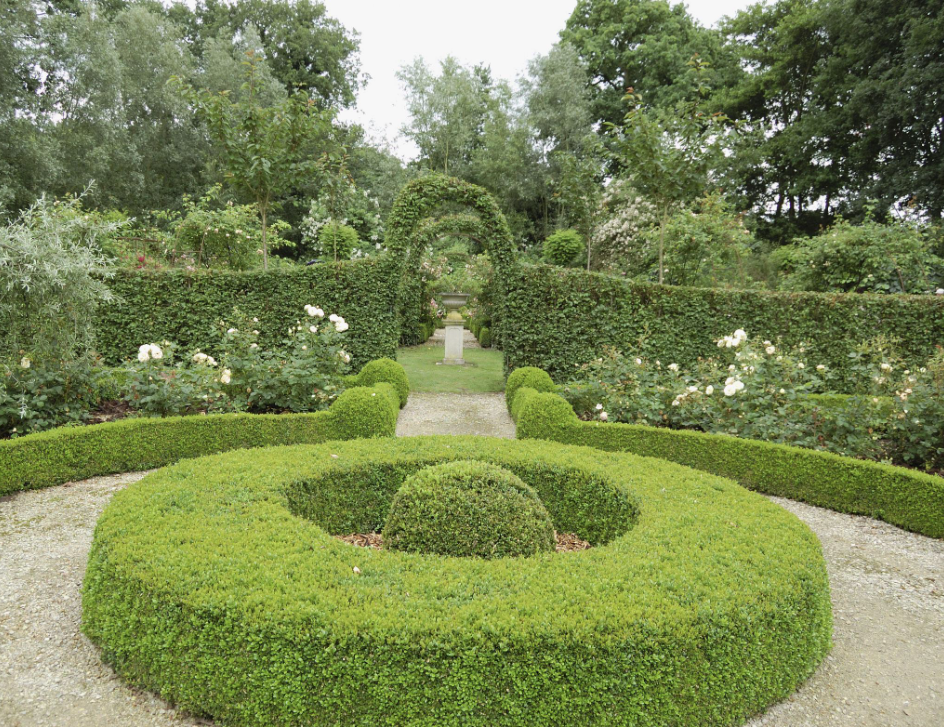
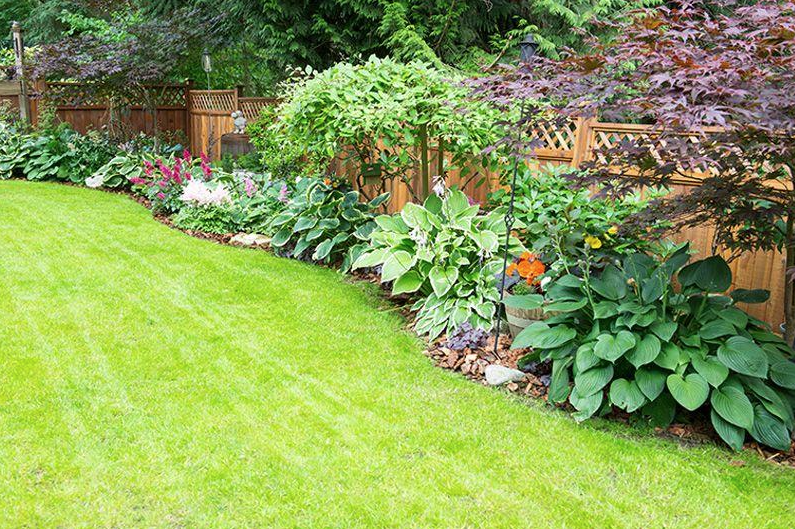
- Symmetrical balance: mirror-image layouts (formal, structured)
- Asymmetrical balance: different elements with equal visual weight (natural, relaxed)
Both approaches are valid—the choice depends on the mood you want to create.
3. Proportion and Scale: Designing for People
A garden must feel right—not just visually, but physically.
- Paths should comfortably fit movement
- Seating should feel sheltered
- Features should suit the size of the space
A massive feature in a small garden—or tiny elements in a large space—can feel jarring.
Design always comes back to human experience.
4. Rhythm and Repetition: Movement Through Space
Repetition creates familiarity. Rhythm creates flow.
Repeating elements—plants, colors, shapes—guides the eye and ties the space together.
Without repetition, a garden feels chaotic. With it, the space feels intentional and calm.
5. Transition: Creating Flow
Good gardens don’t jump abruptly from one idea to another—they flow.
- Tall trees transition to shrubs, then to groundcovers
- Bold colors soften into neutrals
- Open spaces lead into enclosed ones
This gradual change creates a natural, comfortable experience.
6. Emphasis: Creating Focal Points
This could be:
- A specimen tree
- A sculpture
- A water feature
- A seating area
Without a focal point, the eye wanders. With one, the garden gains clarity and purpose.
Part III: The Cottage Garden — Structure Beneath Informality
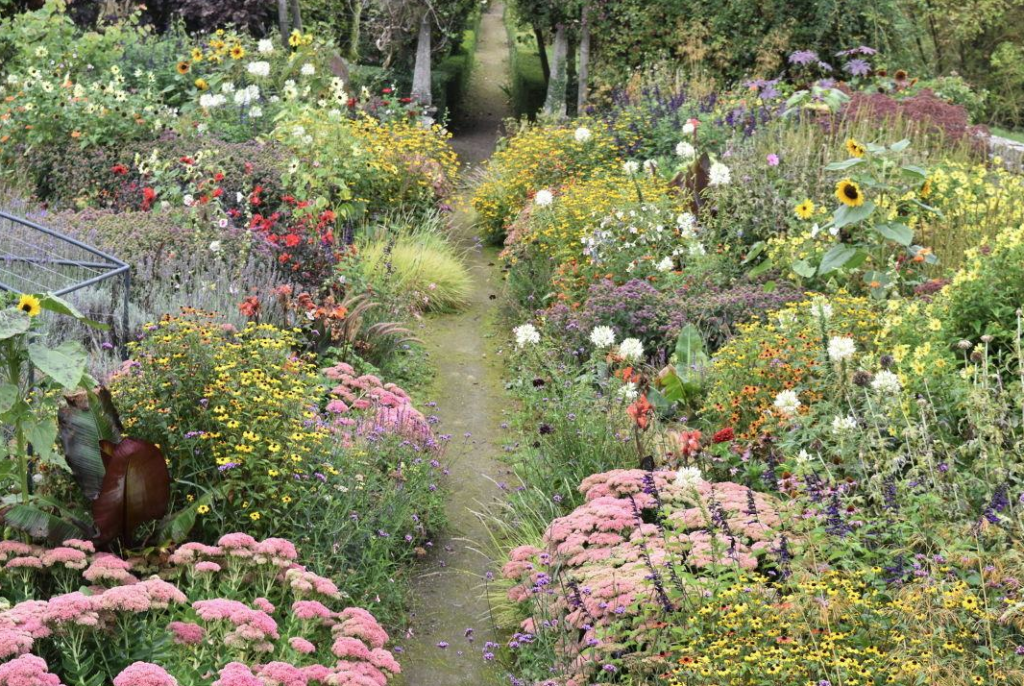
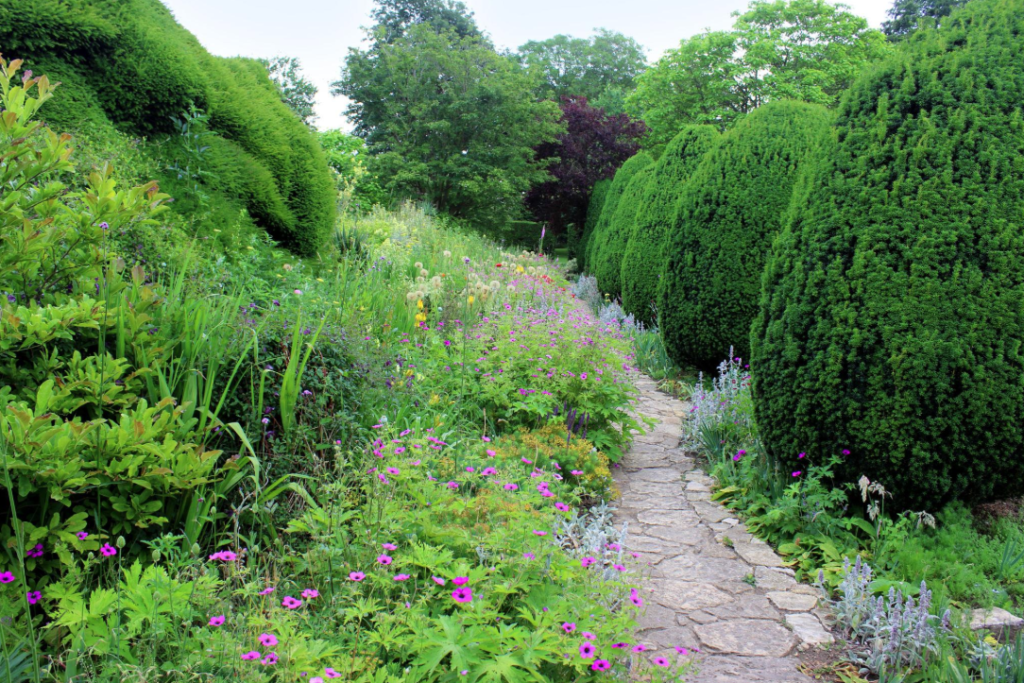
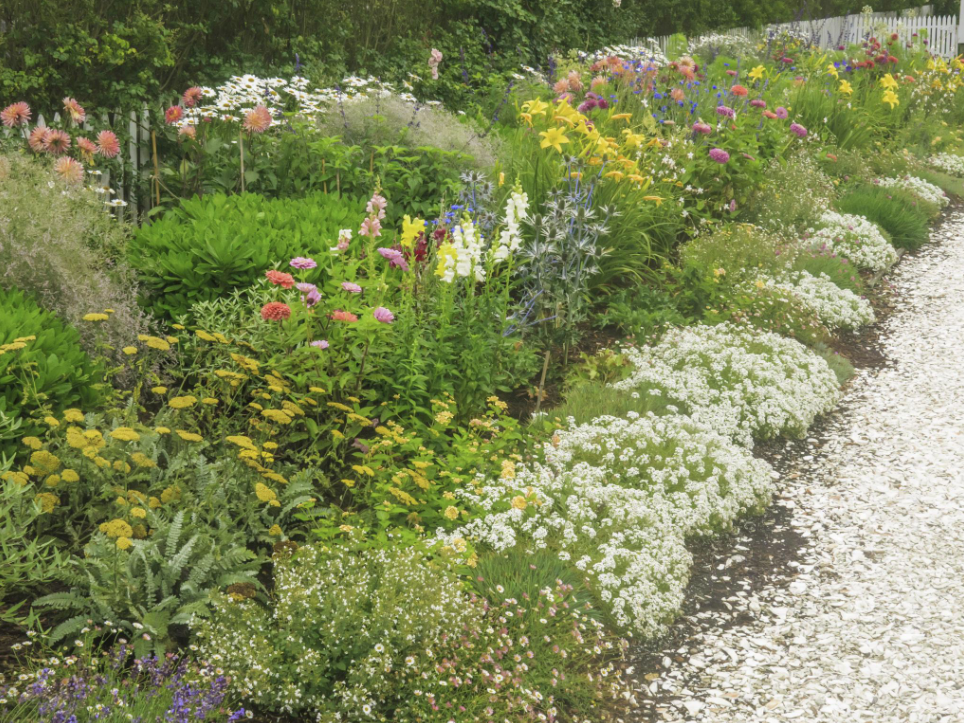
One of the most beloved garden styles—the English cottage garden—is a perfect example of how these elements and principles come together.
At first glance, cottage gardens appear informal, abundant, even chaotic.
But look closer, and you’ll see something very different.
1. Structure Beneath Freedom
Even the loosest cottage garden has structure:
- Paths guide movement
- Boundaries define space
- Garden “rooms” create organization
The planting may spill and wander—but it does so within a clear framework.
2. Layering and Abundance
Cottage gardens are densely planted:
- Tall plants rise through lower ones
- Groundcovers fill gaps
- Plants intermingle and overlap
This creates depth, reduces weeds, and builds that lush, immersive feel.
3. Beauty and Usefulness Combined
Historically, cottage gardens were practical spaces:
- Herbs, vegetables, and fruit mixed with flowers
- Edges softened with edible plants
- Beauty woven into everyday life
This blend of function and beauty gives the style its warmth and authenticity.
4. Softness and Human Connection
Plants are allowed to:
- Spill over paths
- Lean into spaces
- Blur boundaries
This softness makes the garden feel welcoming—designed for people, not just appearance.
5. Year-Round Interest
A well-designed cottage garden works in every season:
- Summer: abundance and color
- Autumn: texture and seed heads
- Winter: structure and form
This reflects a deeper truth: a garden isn’t just about peak moments—it’s about continuity.
Part IV: The Practical Process — Designing in the Real World
Before choosing plants or materials, every successful garden begins with understanding the site.
1. Site Analysis
- Sun and shade (aspect)
- Soil type (clay, sand, loam)
- Microclimates (wind, frost pockets)
These determine what will thrive—not just what looks good.
2. Functional Design
Ask how the space will be used:
- Entertaining
- Relaxing
- Growing food
- Playing
A beautiful garden that doesn’t function well will never feel successful.
3. Zoning the Space
Divide the garden into areas:
- Dining space
- Planting beds
- Lawn or open area
- Productive garden
This creates clarity and usability.
Conclusion: From Planting to Composing
At its heart, garden design is about balance:
- Structure and freedom
- Beauty and function
- Nature and intention
Whether you’re inspired by formal geometry or the relaxed abundance of a cottage garden, the same underlying principles apply.
When you understand the elements—line, form, texture, color—and the principles—unity, balance, proportion, rhythm, transition, and emphasis—you gain a new way of seeing.
You begin to notice how spaces feel.
Why certain gardens work.
How small decisions shape the whole.
And most importantly, you gain the ability to create something that is not just visually pleasing—but meaningful, personal, and lasting.
Because a great garden isn’t just designed.
It is composed, experienced, and lived in—over time.