
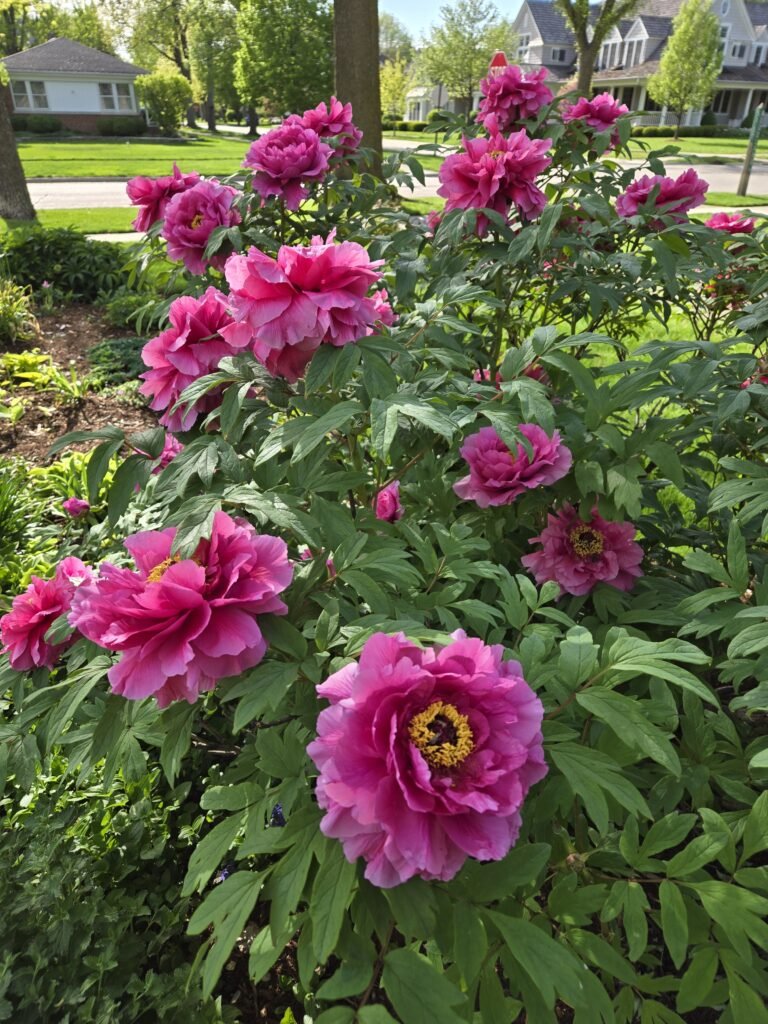
Peony Problems & Solutions: How to Keep Your Plants Healthy
Peonies are known for being resilient and long-lived—but like all garden plants, they can run into occasional problems.
The good news? Most issues are easy to identify and treat if caught early.
1. Powdery Mildew
Symptoms:
- White or gray powder on leaves
- Appears late June through September
Impact:
- Not fatal, but unsightly
- More common on herbaceous and Itoh peonies
Solutions:
- Spray neem oil or horticultural oil
- Use a natural milk spray (30% milk, 70% water)
- Apply on sunny days for best results
2. Botrytis Blight
Symptoms:
- Wilting stems
- Blackened buds
- Sudden plant collapse
When It Occurs:
- Cool, wet, humid conditions
- Often in early spring
Why It Matters:
This is one of the most serious peony diseases and can persist in soil for years.
Treatment:
- Remove infected plant parts immediately
- Disinfect tools between cuts (10% bleach solution or wipes)
- Dispose of debris (do NOT compost)
- Use fungicide if needed
3. Peony Blotch
Symptoms:
- Dark spots or blotches on leaves
- Weakens plant over time
Long-Term Impact:
Not immediately fatal—but repeated infection reduces plant vigor.
Treatment:
- Remove and dispose of infected foliage
- Clean up all debris around plants
- Apply fungicide specifically labeled for peony blotch
4. Lack of Blooms
Common Causes:
- Planted too deep
- Too little sunlight
- Immature plants (especially tree peonies)
Fix:
- Ensure buds are just below soil surface
- Move to a sunnier location if needed
- Be patient—some peonies take years to establish
5. Floppy Flowers
Cause:
- Heavy blooms + rain
- Soft stems (herbaceous types)
Solution:
- Use peony cages or supports early in the season
- Consider Itoh varieties for stronger stems
Preventing Problems Before They Start
The best defense is good garden habits:
- Provide proper spacing for airflow
- Avoid overhead watering
- Clean up debris regularly
- Use mulch to prevent soil splash
Healthy plants are far less likely to develop disease.
Final Thought
Peonies are incredibly forgiving. Even when problems arise, they rarely mean the end of the plant.
With a little attention and care, your peonies will reward you with decades—if not generations—of stunning blooms.
Get the Free Guide
Free Garden Resource Library
Get instant access to all of our guides.
Thank you!
Check your email in a moment for your Garden Resource Library access.
Watch the Video
As temperatures drop, it can be tempting to cut roses back hard — but that’s the fastest way to lose next spring’s blooms.
In this video, I’ll show you how to prune roses the right way in fall: when to prune, how much to cut, and how to get your rose bushes ready for winter’s chill.
You’ll learn what to do for hybrid teas, climbers, floribundas, and Knock Out roses, plus simple winter prep to keep your garden looking beautiful come spring.